
agilerr.app
FAQ
The practical questions teams ask before they install Agilerr: setup, runtime, AI, permissions, and release behavior.
Search
Getting started
What does Agilerr run as?
Agilerr runs as a single application. The Go backend, embedded PocketBase auth and storage, and the product frontend are served together from one binary in release builds.
Do I need a separate database?
No. PocketBase is embedded. For normal local or small-team usage, you only need the Agilerr binary or the Docker image plus a persistent volume for PB_DATA_DIR.
Environment variables
Which environment variables matter first?
The most important are ADMIN_EMAIL, ADMIN_PASSWORD, PB_DATA_DIR, HTTP_ADDR, and AGILERR_API_KEY. If you want AI Add, also set OPENAI_API_KEY and optionally OPENAI_BASE_URL plus OPENAI_MODEL.
What happens if I do not set HTTP_ADDR or AGILERR_API_KEY?
Agilerr can generate a random local port and a random API key at startup. That is useful for local one-click runs, but for stable installs you should set both explicitly.
AI Add
How does AI Add work?
AI Add runs a compact planning conversation attached to a project or parent item. It asks one question at a time, proposes items for review, and lets you accept, reject, or edit each proposal before anything is created.
Can I run Agilerr without OpenAI?
Yes. The app still supports projects, backlog, kanban, bugs, permissions, API access, and MCP without any OpenAI configuration. AI Add simply stays unavailable.
Product
Where should new users start?
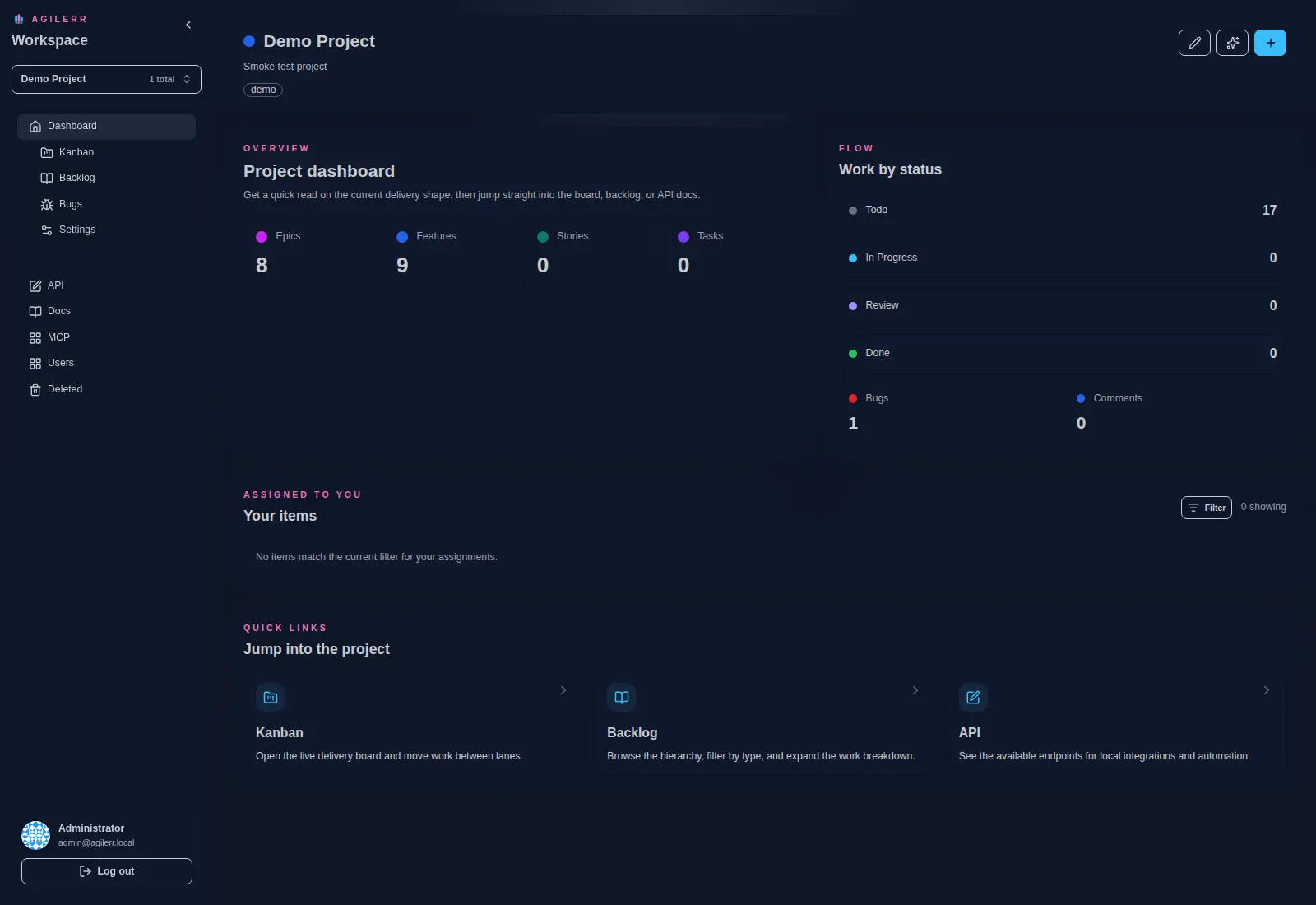
Start on the project dashboard. From there the user can move into kanban, backlog, bugs, docs, and assigned work using the sidebar and project routes.
How do backlog filters work?
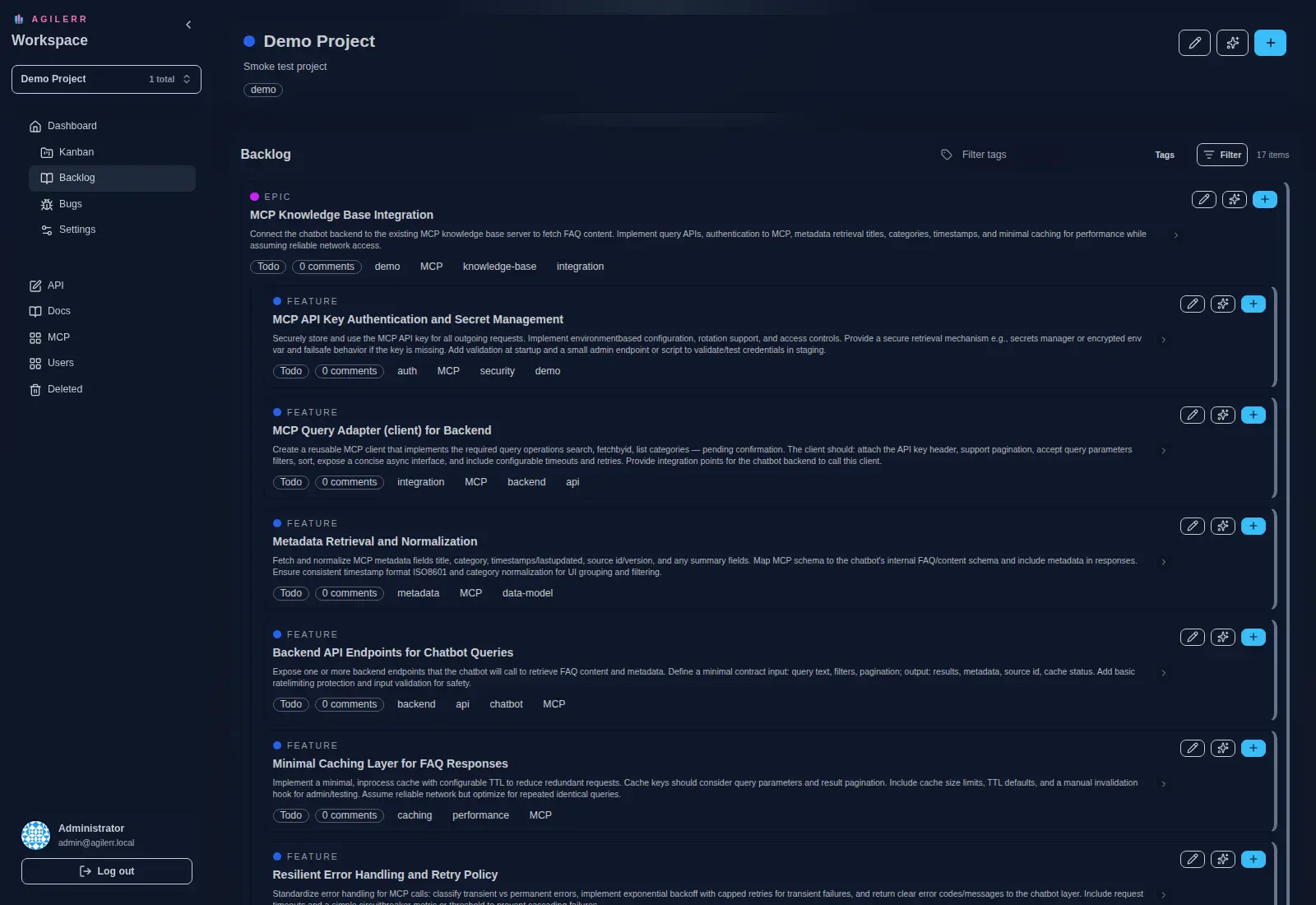
Backlog views support item-type filtering and tag filtering. Descriptions stay collapsed by default so larger hierarchies remain readable.
How are bugs handled?
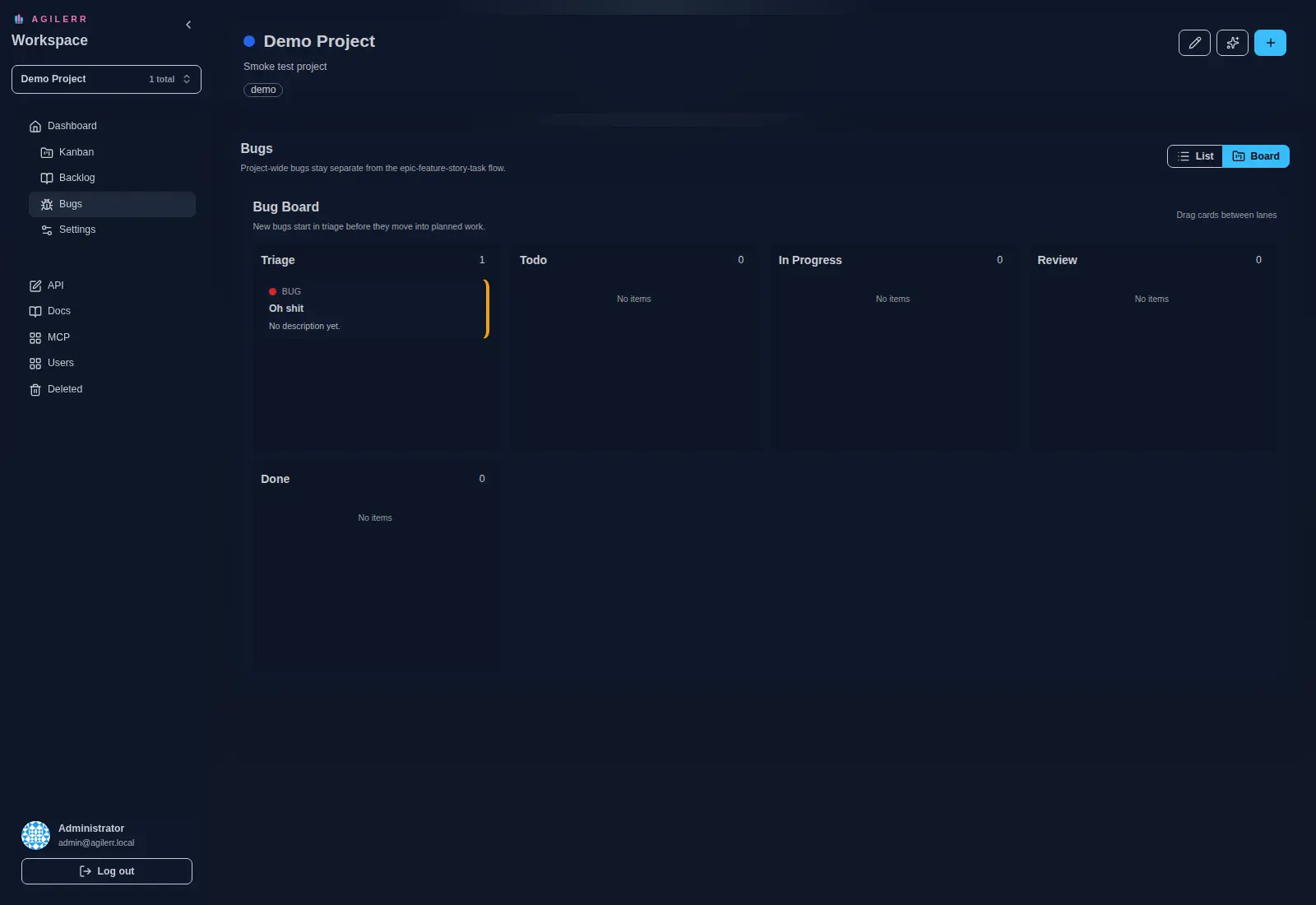
Bugs are separate from the epic-feature-story-task hierarchy. They live on the dedicated bugs page and start in triage.
Admin
How do permissions work?
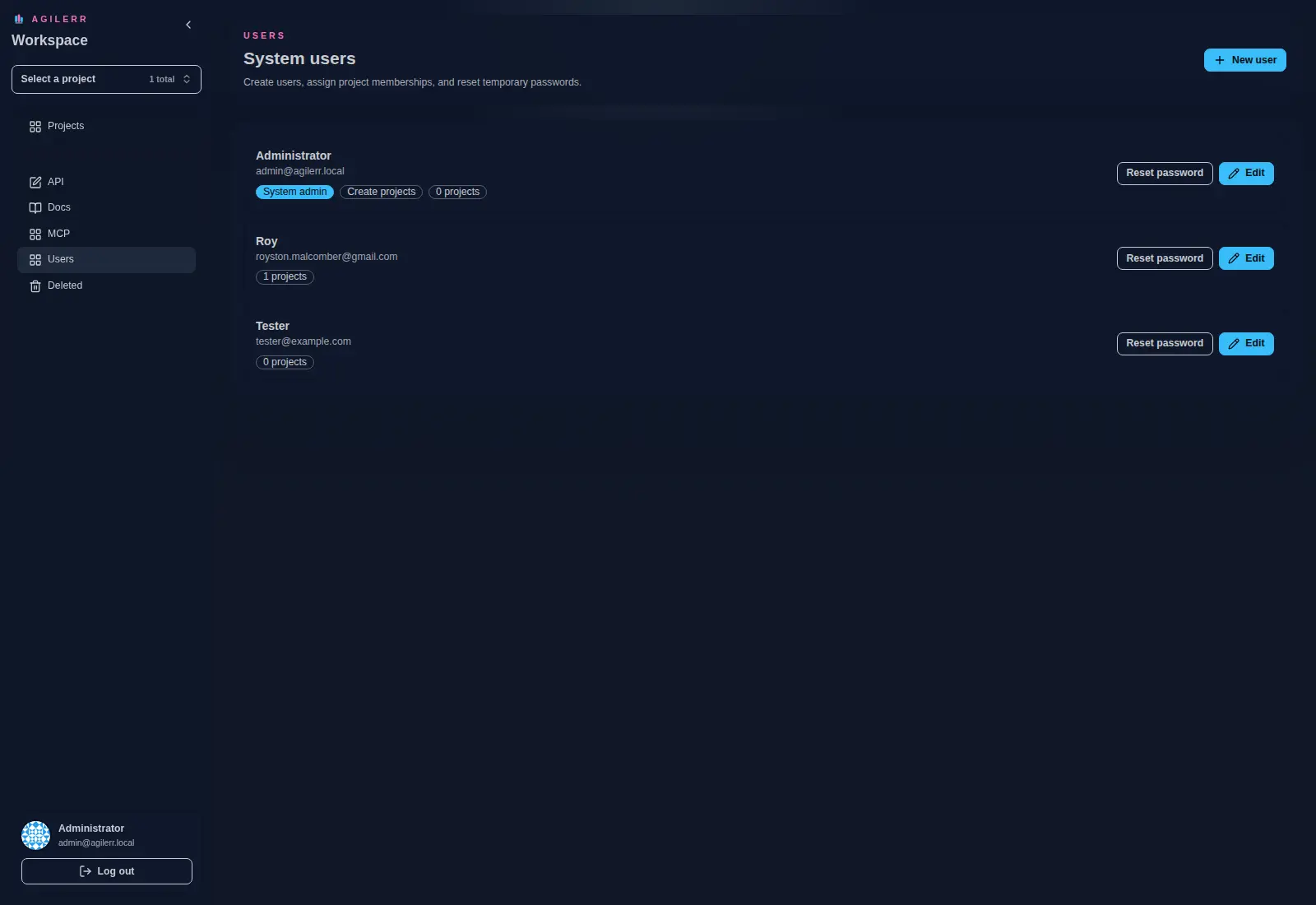
Permissions are scoped per project, with system admins able to manage users, project membership, passwords, API docs, and MCP docs. UI actions are hidden when the current user does not have permission.
Release
How will upgrades work later?
The binary now stores its current schema version and last binary version in the database metadata. Future releases can ship ordered migrations and apply them when the database version is older than the binary.